
Contents
At a glance
- Three main shapes: the barrel, the cabin (often glass-fronted) and the contemporary cube.
- Two types of heating: the wood-burning stove, traditional and self-sufficient, or electric, programmable.
- A simple installation if the ground is level and stable, but check the planning side.
- The ideal pairing: sauna + wood-fired hot tub or cold plunge, for the hot–cold ritual (see the right bathing temperature).
Outdoor sauna shapes
| Shape | Strengths | Limits |
|---|---|---|
| Barrel | Compact volume that heats quickly, iconic shape, simple to install | Curved interior, less headroom |
| Cabin | More space, large glazed panels possible, integrated changing room | More volume to heat, higher price |
| Cube / contemporary | Modern architecture, refined integration into a designed garden | Often high end |
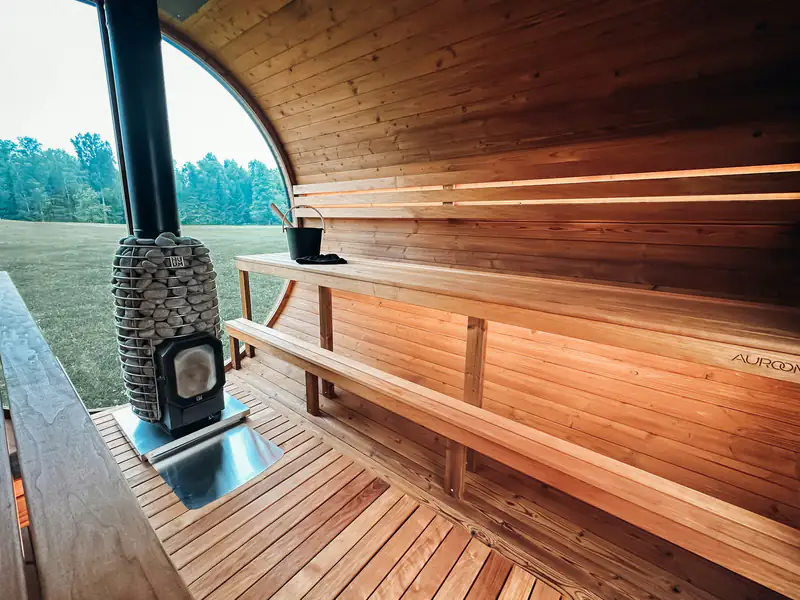
Heating: wood or electric
Wood-burning stove
- Authentic experience, the crackle of the fire
- No electrical connection
- Flue and safety clearances to plan
- Fire to feed during the session
Electric stove
- Programmable heating, no supervision
- No smoke for the neighbours
- Dedicated electrical circuit required
- Running cost tied to the price of electricity
The timber
As with wooden hot tubs, Nordic spruce is the most common, thermowood (thermally modified timber) stands up better to damp and the weather, and red cedar remains the high-end benchmark for its scent and durability. Inside, benches are often made of aspen or alder, woods that stay relatively cool to the touch.
How much does an outdoor sauna cost?
The price depends on the shape, size, timber, stove and finishes (glazing, lighting, changing room). Outdoor saunas from European manufacturers usually start at a few thousand euros for a compact barrel, and go well beyond that for a glass-fronted cabin or a contemporary model. UK buyers should also check delivery costs and any import VAT or duties. Always ask for a price that is delivered, installed and ready to use, so you can compare.
Our advice: if you are torn between a sauna and a wood-fired hot tub, think of the complete ritual. Many owners start with one and add the other, with a cold plunge in between.
Installation
- Base: concrete slab, pads or decking, level and stable.
- Location: out of sight, and at a safe distance from flammable materials if the stove is wood-burning.
- Electrics: for an electric stove, a dedicated circuit installed by a qualified electrician (in England and Wales, typically notifiable work under Part P).
- Planning: depending on size and position, planning permission may be needed: check with your local planning authority.
Find the details in our installation guide.
Sources and method
Figures checked on 4 November 2026. Prices taken from the makers’ public product pages; rules and data from the official sources below.
- A child in the sauna — Suomen Saunaseura (Finnish Sauna Society) : Finnish saunas use a high air temperature of around 80–90 °C
Frequently asked questions
What temperature is an outdoor sauna?
A Finnish sauna is most often enjoyed between 70 and 90 °C, with humidity that varies according to how much water is poured on the stones. Everyone adjusts the duration and heat to their own comfort.
Do I need planning permission for an outdoor sauna?
An outdoor sauna is a small garden building: depending on its size, height, position and local rules, it may fall within permitted development or need planning permission, and listed buildings and conservation areas have stricter rules. Check with your local planning authority (your local council in Ireland) before ordering.
Wood-burning or electric sauna stove?
A wood-burning stove offers the traditional experience and needs no connection, but it must be fed and requires a flue. An electric stove can be programmed and heats without supervision, but needs a dedicated circuit installed by a qualified electrician.